top of page

Available Courses 

Explore our currently available training programs, designed for law enforcement professionals, organizational leaders, and investigators seeking science-backed, field-tested communication and interviewing skills.

​

Each course in this curriculum reflects the highest standards in professional development — combining behavioral science, real-world experience, and decades of instructional expertise.

From mastering the Cognitive Interview to building emotional intelligence and supervisory effectiveness, these programs are built to equip you with tools that work in the moments that matter most.

Learn more about each of these courses.

AdobeStock_220269219.jpeg

Cognitive
Interviewing

Analytc-Interview.jpg

Deception 
Detection

Leadership.jpg

Proactive
Leadership

Cognitive Interviewing

​

This 16-hour course equips law enforcement professionals with scientifically validated techniques to elicit accurate and detailed information from victims, witnesses, and suspects.


Participants learn the Cognitive Interview protocol, a systematic approach supported by over 500 studies and adopted by the U.S. Department of Justice. The course integrates memory-jogging strategies, rapport-building skills, and emotional intelligence techniques to enhance interview effectiveness while avoiding contamination of memory.

​

Students also develop advanced skills in detecting deception, microexpression recognition, and empathic communication, enabling them to manage emotions, build trust, and obtain reliable statements even in high-stress situations.


Through a combination of Tell-Show-Do instruction, role-play practicums, and feedback, participants will leave with practical tools to conduct legally defensible, high-quality interviews that improve case outcomes.


Who Should Attend: Investigators, detectives, and officers conducting interviews or use-of-force follow-ups.

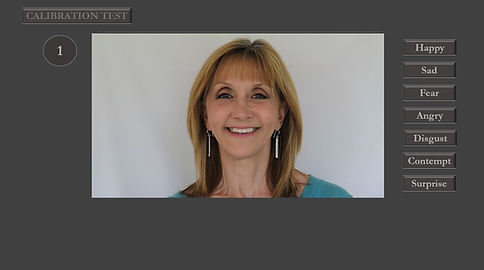
Day 1 – Foundations of Cognitive Interviewing & Emotional Intelligence 08:00 – 08:30 – Introduction & Course Overview Importance of accurate information in investigations History and science behind the Cognitive Interview 08:30 – 10:00 – Emotional Intelligence in Interviewing Understanding emotional blocks to memory recall Emotional vocabulary and hierarchy of emotional intelligence Exercise: Emotional Matrix self-test 10:00 – 10:15 – Break 10:15 – 11:30 – Reading Emotions & Microexpressions (Part 1) Seven universal emotions and their investigative relevance Exercise: Microexpression calibration test 11:30 – 12:00 – Engaged Listening Skills Controlling the interview by listening Avoiding judgmental verbal/nonverbal cues 12:00 – 13:00 – Lunch 13:00 – 14:30 – Reading Emotions & Microexpressions (Part 2) Detecting hidden and subconscious emotions to clear emotional clutter Exercise: Microexpression recognition & practice 14:30 – 14:45 – Break 14:45 – 16:15 – Responding Skills & Rapport Building Demonstrating empathy and establishing trust Exercise: Role-play responding techniques 16:15 – 16:30 – Daily Wrap-Up & Learning Journal Entries Day 2 – Applying the Cognitive Interview Protocol 08:00 – 08:30 – Review & Discussion Key takeaways from Day 1 Addressing participant questions 08:30 – 10:00 – Cognitive Interview Protocol (Part 1) Six-step CI protocol overview Memory-jogging techniques, context reinstatement, and rapport building Exercise: Guided memory retrieval practice 10:00 – 10:15 – Break 10:15 – 11:45 – Cognitive Interview Protocol (Part 2) Narrative statements, first echo, and probing for details Funneling technique & framing method 11:45 – 12:45 – Lunch 12:45 – 14:15 – Practicum 1 Role-play CI as interviewer, witness, and observer Observer feedback & discussion 14:15 – 14:30 – Break 14:30 – 15:30 – Practicum 2 – Advanced Interviewing Techniques Reverse order recall, perspective change, and emotional management during interviews 15:30 – 16:00 – Use-of-Force & High-Stress Incident Interviews Applying CI with officers after traumatic events 16:00 – 16:30 – Closing, Review & Learning Journal Submission Reinforcing key techniques Q&A

Deception Detection

Gain a deep understanding of how to recognize and manage deception in high-stakes environments. This training blends insights from psychotherapy, emotional intelligence, and advanced interviewing science to help professionals identify truthfulness through behavior — not assumption. You’ll learn how to analyze facial expressions (including micro-expressions), vocal tone, body language, and word choice to spot incongruence and deception. Drawing on real-world law enforcement applications and academic research, this course prepares you to remain calm, observant, and in control during interviews, confrontations, or moments of uncertainty. Whether you're leading a team or conducting an investigation, Deception Detection training gives you the edge to ask the right questions, interpret answers accurately, and uncover what's really going on.

Proactive Leadership

Proactive Leadership is designed for professionals ready to elevate how they lead, influence, and communicate. This course delivers a powerful combination of emotional intelligence, behavioral science, and real-world leadership experience — offering participants the skills to respond decisively in complex, high-stakes environments. Throughout the training, participants learn to recognize and manage emotional cues, build subconscious rapport, and navigate difficult conversations with clarity and confidence. Drawing from years of law enforcement command experience and academic research, the course helps leaders build trust quickly, ask better questions, and resolve conflict while preserving team cohesion. Available in both 2-day and 3-day formats, the curriculum includes advanced leadership techniques such as transformational leadership, decision-making frameworks rooted in Game Theory, and belief-system management. The extended 3-day version also explores the ethical complexities of leadership, teaching participants how to make principled decisions under pressure and foster accountability within their organizations. Whether you're leading a department, managing change, or guiding others through moments of uncertainty, Proactive Leadership provides the mindset, tools, and communication strategies needed to influence outcomes and lead with integrity.

  • LinkedIn
  • Facebook

©2021 Tab Cooper & Associates, LLC

bottom of page